
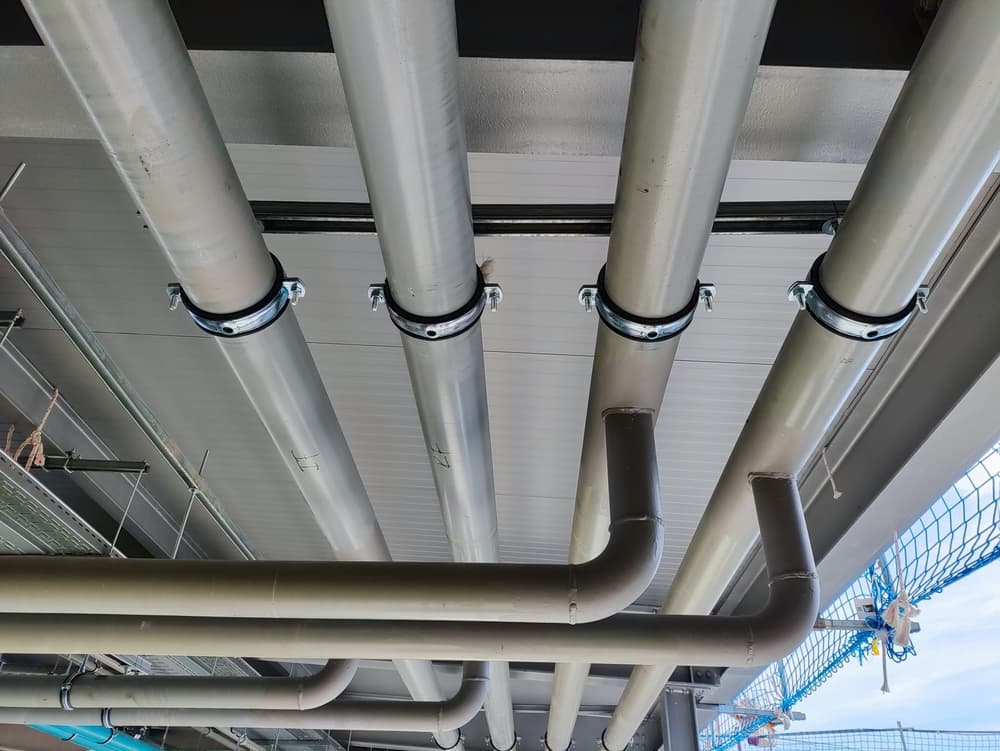
Every piping run is only as dependable as the hardware holding it up. Pipe hangers carry the weight of your lines, steady them against vibration, and give the pipe room to expand and contract as temperatures change. Get the supports right, and a system runs quietly for decades; get them wrong, and you invite sagging, stress at the joints, leaks, and expensive rework down the road. Whether you are running a single water line or laying out a full industrial system, the supports you choose shape how the finished job performs. Here is how we help customers match the right pipe hangers and supports to the work in front of them.
Common Types of Pipe Hangers and Supports
There is no single "best" hanger; the right choice depends on how the pipe moves, what it carries, and where it lives. Understanding the common pipe hanger types makes the selection far simpler:
- Rigid supports: lock the pipe firmly in place where precise alignment matters, such as process lines, pump connections, and anywhere movement needs to be restricted.
- Spring hangers: allow controlled vertical movement, which makes them essential for hot lines that expand and contract with temperature swings.
- Sway braces and vibration dampers: stabilize pipe against seismic activity and mechanical movement, and quiet the noise that comes with pumps and fast-moving media.
- Adjustable pipe supports: let you fine-tune height and alignment on site, without stopping to fabricate custom parts.
- Specialty supports: insulated supports, cryogenic supports, guides, and anchors built for the most demanding environments.
Most systems use a mix of these. A long horizontal run might rely on rigid supports at regular intervals, spring hangers where heat is a factor, and a brace or two where vibration tends to build.
Pairing Hangers with the Right Clamp
Hangers and clamps do two different jobs, and a stable system depends on both. A hanger suspends the pipe from the structure above and bears the load; a clamp secures the pipe to that hanger and controls unwanted motion. Without the right clamp, even a well-placed hanger will let a line shift, rattle, or drift out of alignment over time. That is why the pairing matters as much as the individual parts.
Proven combinations we ship every day include clevis hangers with a standard band clamp, rod hangers with split-ring clamps, and trapeze hangers carrying several lines at once with individual clamps for each pipe. For hot or cold service, insulated supports pair with specialty clamps that protect the insulation while still holding the load securely. Matching the clamp to the hanger, the pipe, and the service condition is what keeps a piping system both secure and stable for the long haul.
Installation Best Practices
The best hardware still needs to go in correctly. A few practices protect the system and the people who maintain it later:
- Follow the manufacturer's spacing and load guidelines for each pipe size and material.
- Apply the correct torque; over-tightening can crush or deform the pipe, while under-tightening lets it move.
- Verify alignment before the line is loaded, so the weight sits evenly across every support.
- Inspect components for damage or defects before installation.
- Leave supports accessible for future inspection, adjustment, and maintenance.
How to Choose the Right Support
When you are weighing the types of pipe hangers and supports for a project, these factors decide the outcome:
- Pipe material and size: heavier and larger lines demand more robust support and closer spacing.
- Load: account for the weight of the pipe, its contents, and any insulation, not just the empty pipe.
- Temperature and thermal movement: choose supports that let the line expand and contract without straining the joints.
- Vibration and noise: cushioned, rubber-lined, or dampened options reduce both.
- Corrosion resistance: stainless steel and other alloys stand up to moisture, chemicals, and harsh conditions.
- Environment and code: indoor versus outdoor exposure, accessibility, and the standards that apply to your project.
Weighing these together, rather than one at a time, is what separates a support that simply holds a pipe from one that keeps the whole system running as designed.
Why Adjustable Supports Save Time and Money
Adjustable pipe supports earn their place on almost any job. Because they level and align without complex on-site work, they cut labor hours and reduce the installation errors that lead to costly rework. They often replace custom fabrication entirely, which is a real advantage in tight or crowded spaces. Over the life of the system, their durability keeps maintenance costs down, so the savings continue long after the crew has moved on.
Materials That Match the Job
The right support is only right if the material suits the environment. We stock pipe hangers and supports in stainless steel for corrosion resistance and clean-service applications, carbon steel for strength and value, aluminum where weight is a concern, and cast iron, brass, and bronze for specialized needs. Matching the support material to the pipe material helps prevent galvanic corrosion and extends the service life of the entire assembly.
Built for Every Application
From plumbing hangers and water pipe hangers on commercial builds to steam lines, HVAC, and fire protection systems, the right support keeps everything running as designed. Rigid and spring supports hold steam and process lines in refineries and power plants; corrosion-resistant hangers serve food processing and pharmaceutical facilities where cleanliness is essential; and adjustable supports speed up plumbing and mechanical work across the board. Whatever the system, the goal is the same: distribute the load, control movement, and protect the pipe.
At PipingNow, we back deep inventories with accuracy, competitive pricing, and a genuine passion for the piping industry, so you get the right hangers and clamps the first time. Come join the PipingNow family and see why they have been calling us "piping people" since 1988.